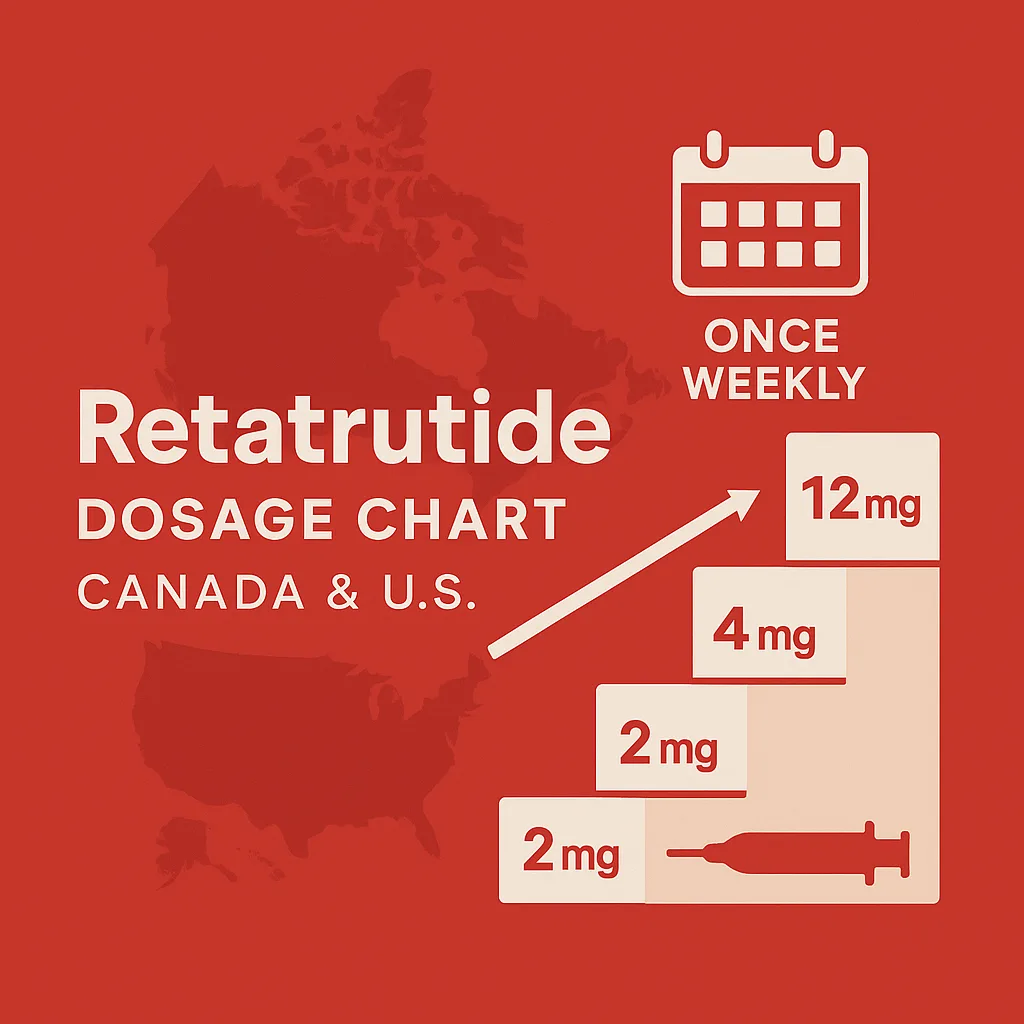
Retatrutide Dosage Chart Canada & US Retatrutide is an investigational triple-agonist peptide that activates GLP-1, GIP, and glucagon receptors. Current access in both Canada and the United States is limited to clinical research settings. This article is informational only. It summarizes how retatr…
In this article
- Retatrutide Dosage Chart Canada & US
- What is retatrutide
- Why titration matters
- Retatrutide dosage charts
- Canada vs United States: what to know about access
- Practical guidance for reading any retatrutide dose plan
- Expected timeline and the “kick in” question
- Side effects and tolerability themes
- Frequently asked questions
- Safety notes for Canada and the U.S.
- Quick reference: all three dosage charts together
- Final word
Retatrutide Dosage Chart Canada & US
Retatrutide is an investigational triple-agonist peptide that activates GLP-1, GIP, and glucagon receptors. Current access in both Canada and the United States is limited to clinical research settings. This article is informational only. It summarizes how retatrutide dosing has been handled inside trials, what a retatrutide dosage chart typically looks like, and common questions people in Canada and the U.S. ask when they search terms like retatrutide peptide, retatrutide dosage, retatrutide dosing, and how long takes retatrutide to kick after tirzepatide.
What is retatrutide
Retatrutide is a long-acting peptide candidate designed to help with obesity and metabolic disease by combining three hormonal signals. In mid-stage research it has been given once weekly by subcutaneous injection. Results have shown dose-dependent weight reduction when people are escalated to higher weekly maintenance doses. Because the mechanism influences appetite and metabolism, clinicians use slow titration to limit gastrointestinal effects and improve adherence.
Why titration matters
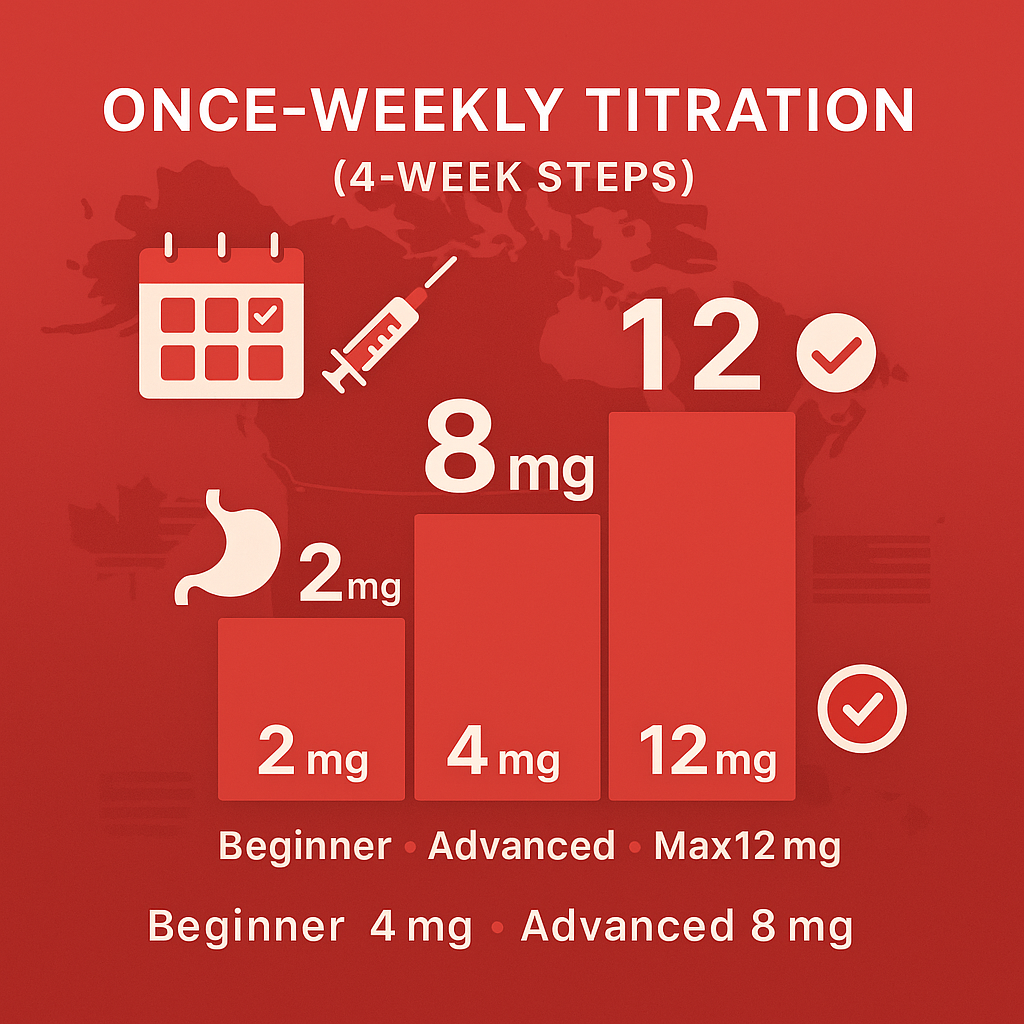
Nearly all incretin-based medicines use a step-up plan. The idea is simple. Start low to gauge tolerance. Increase in measured steps to reach a dose that delivers results while keeping nausea, vomiting, and diarrhea manageable. Retatrutide fits this pattern. Trial designs used regular 4-week intervals to step participants up to a target maintenance dose.
Key points that shape the retatrutide dosage chart
Route: subcutaneous injection
Frequency: once weekly
Typical step interval: about every 4 weeks
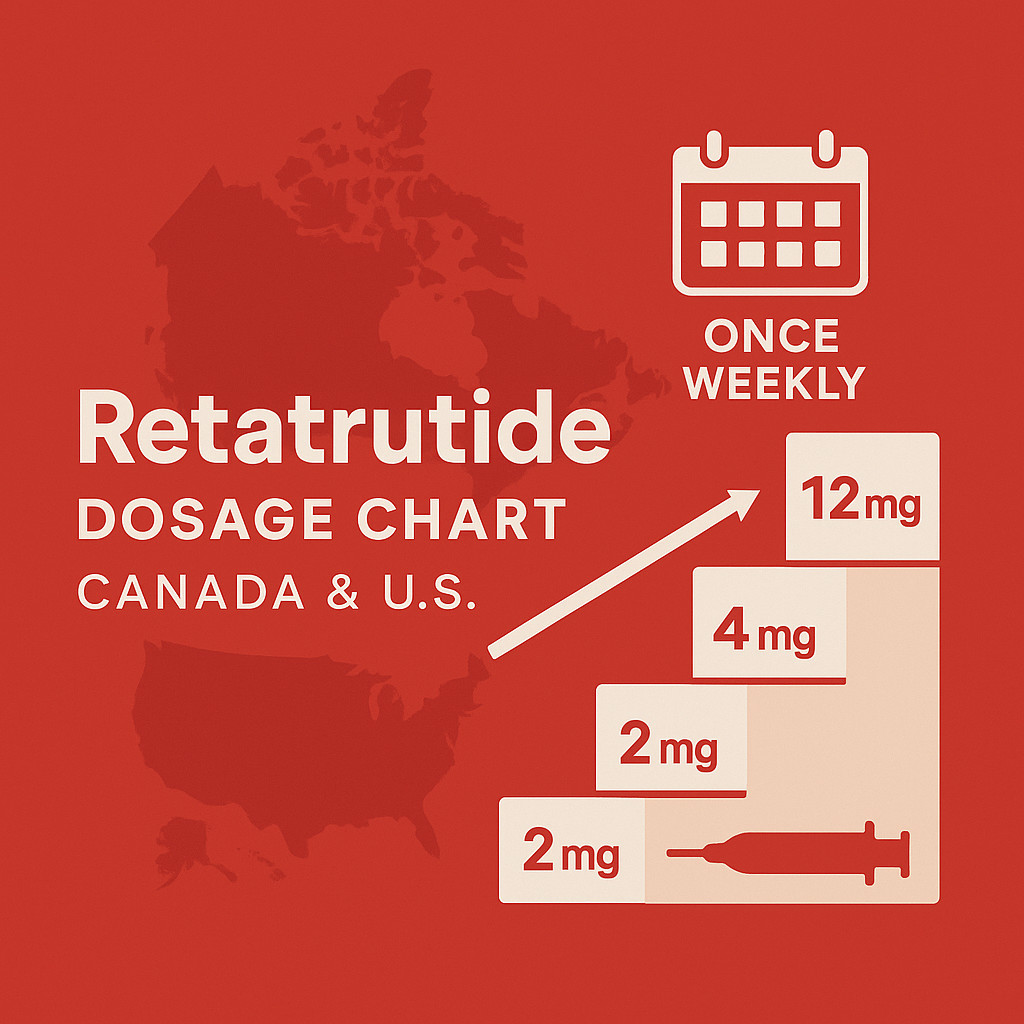
Maintenance targets that have been studied: 4 mg, 8 mg, and 12 mg weekly
Half-life: roughly 6 days, which supports weekly injections and means steady state takes several weeks
Retatrutide dosage charts
The following charts reflect informational trial-style titration. They are not instructions for personal use and not a substitute for medical care. If you live in Canada or the United States, dosing decisions must be made by a licensed clinician within a regulated program or clinical study.
Beginner titration to a 4 mg weekly maintenance
This mirrors conservative starts seen in research, useful when the goal is to build tolerance first and target a moderate weekly dose..
| Week | Weekly Dose | What to Watch |
| 1 | 1.0 mg | Learn your personal tolerance. Track nausea and appetite changes. |
| 2 | 1.5 mg | Monitor adaptation to the dosage increase. |
| 3 | 2.0 mg | Monitor adaptation to the dosage increase. |
| 4 | 2.5 mg | Monitor adaptation to the dosage increase. |
| 5 | 3.0 mg | Monitor adaptation to the dosage increase. |
| 6 | 3.5 mg | Monitor adaptation to the dosage increase. |
| 7–48 | 4.0 mg (up to 6.0 mg) | Maintain at 4 mg if goals are met and side effects are controlled. Increase up to 6 mg only if needed. |
Why this path
The slow start gives the GI system time to adapt before settling into a steady weekly dose that still provides a meaningful effect.
Advanced titration to an 8 mg weekly maintenance
This plan represents the standard step-up toward higher efficacy while still following a moderate pace.
| Week | Weekly Dose | What to watch |
|---|---|---|
| 1–4 | 2 mg (some arms used 4 mg start) | Choose the starting point based on prior incretin experience and tolerance. |
| 5–8 | 4 mg | Step when side effects are mild and stable for at least a week. |
| 9–48 | 8 mg | Maintain at 8 mg for stronger weight-loss effect if tolerated. |
Why this path
Two to three steps reduce dropout risk and let appetite and GI symptoms settle before moving higher.
Bodybuilder or maximal recomposition titration to 12 mg weekly
Important note. Retatrutide is not approved for physique use. This schedule only shows the highest maintenance dose studied under medical supervision.
| Week | Weekly Dose | What to watch |
|---|---|---|
| 1–4 | 2 mg | Start low even if you have prior GLP-1 or tirzepatide experience. |
| 5–8 | 4 mg | Confirm that day-to-day life tolerates the medication. |
| 9–12 | 8 mg | Increase only after stable symptoms. |
| 13–48 | 12 mg | Highest maintenance dose explored in mid-stage research. |
Why this path
A four-step ladder gives the best chance to reach 12 mg while managing GI effects. The slower approach also respects the six-day half-life and the time needed to reach steady state at each level.
Canada vs United States: what to know about access
Regulatory status: Not approved for general prescribing in Canada or the U.S. Access is through clinical trials and strictly controlled programs.
Supply and format: In trials, retatrutide is provided in a study format suitable for subcutaneous injection. Participants follow the exact titration and monitoring plan defined by the protocol.
Clinical monitoring: Doses can be held or reduced if side effects flare. Clinicians check weight, GI symptoms, metabolic labs, and overall well-being to guide escalation.
Practical guidance for reading any retatrutide dose plan
Start low. A 2 mg weekly start gives most people room to adjust.
Use 4-week blocks. That window covers several half-lives and brings you close to steady state before the next step.
Escalate only when stable. If you are still dealing with significant nausea or vomiting near the end of a block, delay the next increase.
Respect maintenance. Once you reach 4, 8, or 12 mg, stay there if benefits are clear and side effects are manageable.
Know the hold and step-down rules. In trials, teams pause or lower the dose if symptoms spike, then resume once they resolve.
Expected timeline and the “kick in” question
Search data often includes the phrase how long takes retatrutide to kick after tirzepatide. There is no official public switching protocol. In general, once-weekly incretins with multi-week titration need several weeks to reach a maintenance dose where the effect becomes obvious. With a six-day half-life, allow around a month at each step for levels to stabilize. Weight changes then compound across months, with the biggest differences reported after long maintenance windows such as 24 to 48 weeks.
Side effects and tolerability themes
The most common effects in incretin trials are GI related. People report nausea, vomiting, diarrhea, early fullness, and occasional constipation. These events are usually dose related and improve by slowing the step-up, pausing at the current dose, or giving the body time to adapt. Hydration, smaller meals, and mindful food choices help as well. If symptoms are persistent or severe, medical teams hold or reduce the dose.
Frequently asked questions
What is retatrutide peptide used for in studies
It is being studied for obesity and related metabolic conditions. The triple-agonist approach aims to reduce body weight, improve glycemic control in some populations, and influence energy use by combining GLP-1, GIP, and glucagon signaling.
What is the retatrutide dosis
The word “dosis” is often typed when people mean dosage. Research has evaluated 1 mg, 4 mg, 8 mg, and 12 mg once weekly, usually after titration through lower steps.
What is retatrutide dosing vs retatrutide dosage
Dosing describes the schedule over time, such as weekly injections and the titration steps. Dosage is the specific amount per injection, such as 8 mg weekly.
Is retatrutide natural
No. It is a laboratory engineered peptide designed to act on human receptors in a targeted way.
Is reconstitution solution good to reconstitute retatrutide
In clinical research, participants receive retatrutide in an approved study format. For peptides in general, laboratories often use bacteriostatic water to reconstitute lyophilized powders. Outside regulated settings there is real risk of contamination and dosing error. People in Canada and the U.S. should not prepare or use unapproved retatrutide products.
How long before I see results
Because the plan is once weekly and stepped every 4 weeks, you will not see the full effect immediately. Expect gradual changes during titration, then larger changes during the longer maintenance phase. Many participants continue to lose weight through 24 to 48 weeks once they settle at 8 or 12 mg.
Can I start higher if I already used tirzepatide or semaglutide
That decision belongs to a prescribing clinician inside a formal program. Prior incretin experience may inform the starting point, but a conservative approach improves tolerability for most people.
Do I ever combine retatrutide with other therapies
Combination approaches are decided by trial protocols or by clinicians in regulated settings. Do not stack investigational peptides with other drugs outside medical oversight.
Safety notes for Canada and the U.S.
Avoid unregulated sources. Unauthorized injectable peptides can be impure or dosed incorrectly.
Speak with a qualified healthcare professional. This includes family physicians, endocrinologists, and obesity medicine specialists.
If you are eligible and interested, search for clinical trials through official registries and discuss the risks, benefits, and commitments with your healthcare team.
Quick reference: all three dosage charts together
Beginner Chart
Target: 4 mg weekly
| Week | Dose |
|---|---|
| 1–4 | 2 mg |
| 5–48 | 4 mg |
Advanced Chart
Target: 8 mg weekly
| Week | Dose |
|---|---|
| 1–4 | 2 mg (some start at 4 mg) |
| 5–8 | 4 mg |
| 9–48 | 8 mg |
Bodybuilder or Maximal Chart
Target: 12 mg weekly
| Week | Dose |
|---|---|
| 1–4 | 2 mg |
| 5–8 | 4 mg |
| 9–12 | 8 mg |
| 13–48 | 12 mg |
Final word
Retatrutide is a promising once-weekly retatrutide peptide still under investigation in Canada and the U.S. The retatrutide dosage approach seen in trials uses slow escalation to 4 mg, 8 mg, or 12 mg with four-week steps because that pattern balances results with tolerability. If you are evaluating options, speak with a licensed clinician. Use this retatrutide dosage chart Canada and U.S. summary as a clear reference to understand how titration works, what timelines to expect, and which questions to ask about safety and access.
Keep reading

Melanotan: Three Compounds, One Name
Three different compounds get called melanotan, and the difference between them is not academic. One is a licensed prescription medicine. One is approved for something entirely unr...
Read article
How to Dose HGH Properly
How to Dose HGH Properly Human Growth Hormone (Somatropin) is one of the most powerful and versatile compounds available for physical enhancement. However, unlike traditional anabo...
Read article
Anavar Cycle for Women
A 2026 evidence-based guide to Anavar (oxandrolone) cycles for women — typical 5-10mg dosing, 6-8 week cycle length, expected results, virilization warning signs, and how to spot r...
Read article