How Long Does Accutane Take to Work? What is Accutane? Accutane is the original brand name for isotretinoin, a prescription retinoid used for severe or persistent acne. When people search what is accutane, they’re usually looking for a straight answer: it is a powerful acne medication that shrinks…
In this article
- How Long Does Accutane Take to Work?
- What is Accutane?
- How does Accutane work?
- How long does Accutane take to work?
- Why timelines differ from person to person
- Accutane before and after: set expectations
- How long is Accutane treatment?
- Common Accutane side effects (and how to manage them)
- Can you drink on Accutane?
- Practical tips that help you see results on schedule
- Sample timelines by acne type
- Skincare routine while on isotretinoin
- What if you miss a dose?
- When to contact your prescriber
- The bottom line: how long it takes
How Long Does Accutane Take to Work?
What is Accutane?
Accutane is the original brand name for isotretinoin, a prescription retinoid used for severe or persistent acne. When people search what is accutane, they’re usually looking for a straight answer: it is a powerful acne medication that shrinks oil glands, unclogs pores, reduces inflammation, and lowers the chance of new cysts forming. Many call it acne pills because it is taken by mouth in capsule form. A single course can lead to long remissions, which is why it remains a go-to option when other treatments fail.
If you are comparing product formats and adjunct care, you can review skin-support options in Ancillaries & Cycle Support and see real shopper feedback on the Reviews page. For those researching dosing strengths, Syntex Accutane 25 mg is a common reference point when discussing isotretinoin capsules.
How does Accutane work?
People also ask how does accutane work. Isotretinoin acts at several levels:
Sebum reduction: Oil production drops, starving acne bacteria of their favorite environment.
Comedolysis: Cell turnover in pores normalizes, so whiteheads and blackheads form less often.
Anti-inflammatory action: Redness and swelling around lesions fall.
Long-term remodeling: With fewer blockages and less oil, breakouts slow and scarring risk falls.
These effects build over weeks. Skin often feels drier and may look a little worse before it looks better. That early phase does not mean the medication is failing.
How long does Accutane take to work?
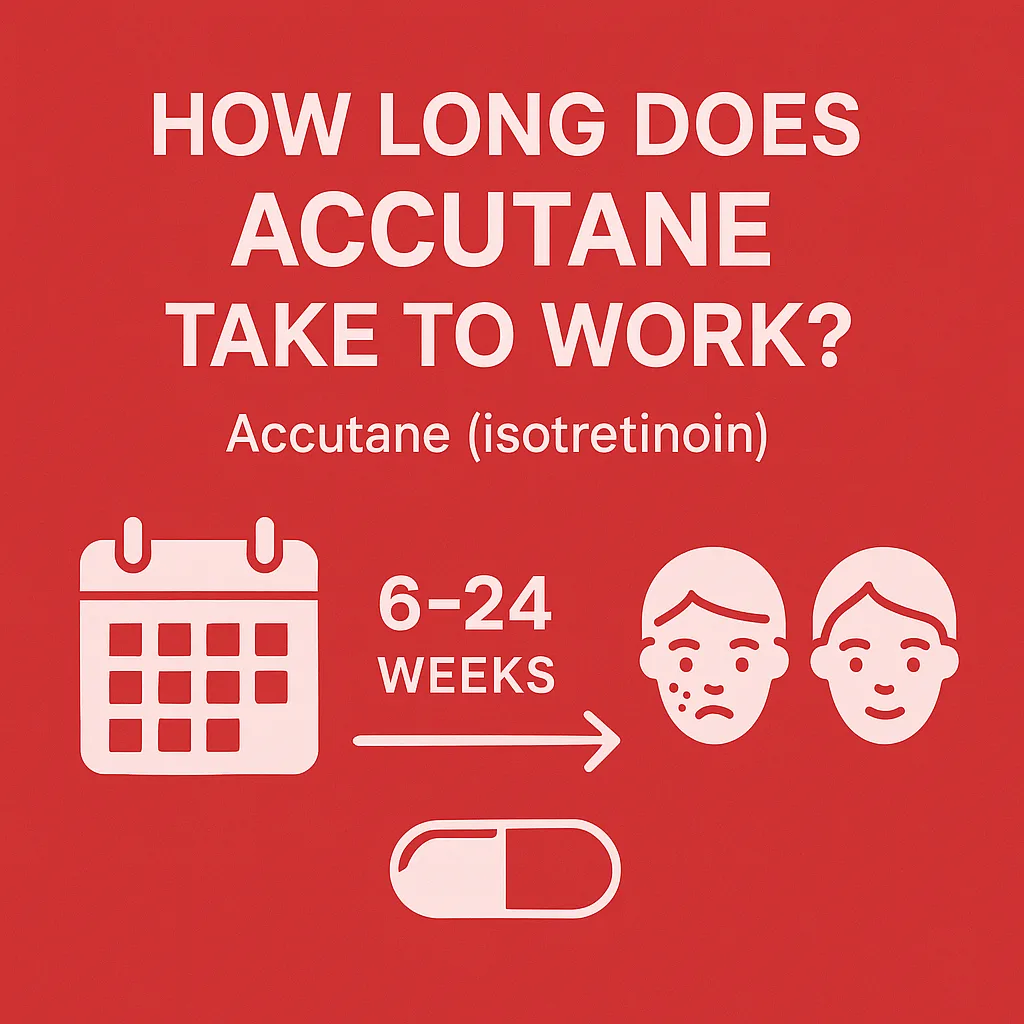
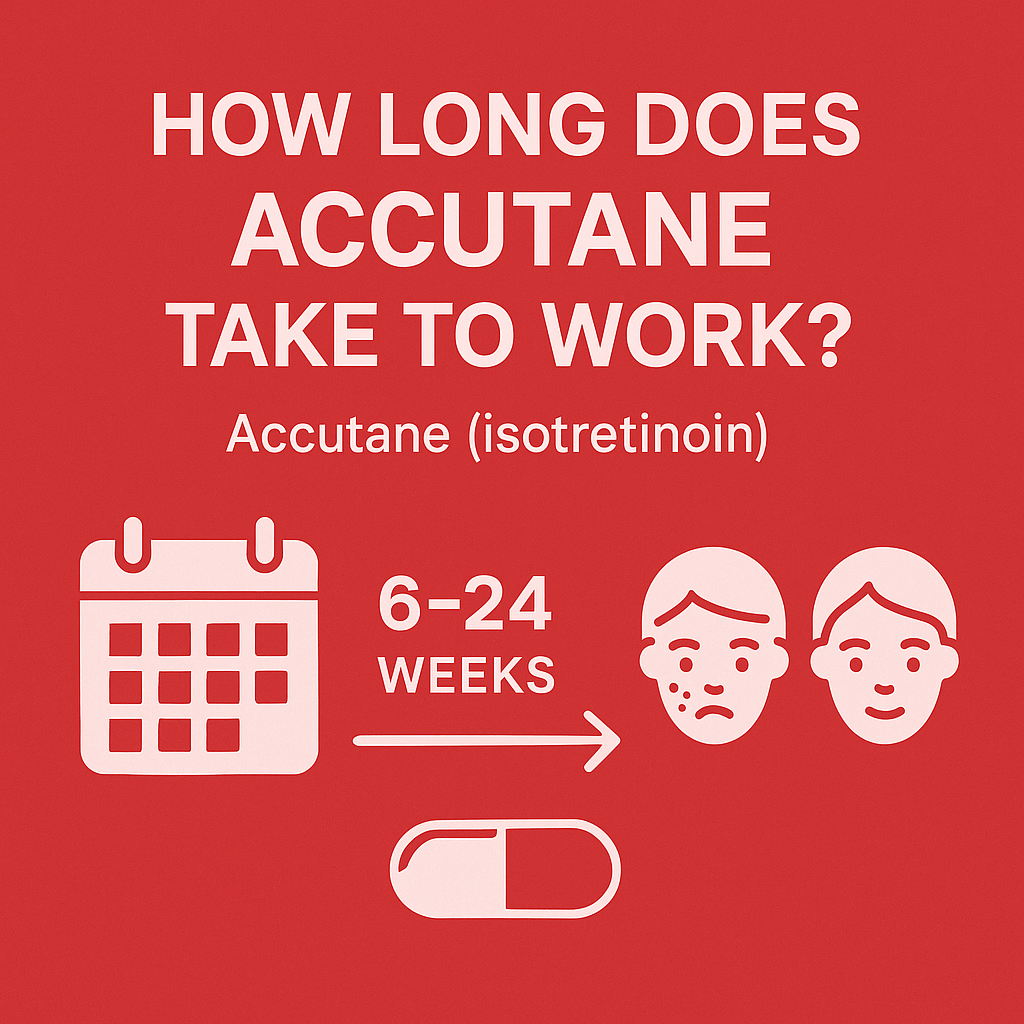
The big question—how long does accutane take to work (or how long does it take for accutane to work)—has a practical answer with a week-by-week arc. Timelines vary, but most people can use the pattern below as a guide.
Weeks 1–2: Dry lips and tight skin begin. Acne often looks the same. A small “purge” is possible.
Weeks 3–4: First subtle improvements for some. New pimples still appear.
Weeks 6–8: Noticeable reduction in fresh inflammatory lesions for many users. Photos start to show progress.
Weeks 10–12: Clearer skin for the majority; painful nodules and cysts decline. Oiliness keeps dropping.
Weeks 16–24: Peak improvements. Most people reach clear or almost clear.
After the course: Skin can keep improving for weeks as oil glands remain smaller.
A full accutane treatment typically lasts 4 to 6 months. Some need longer, especially if dose reductions were necessary for side effects. Questions about scheduling, lab work, or travel are covered in the FAQs and on the clinic side of your care.
Why timelines differ from person to person
Several factors control speed and depth of response:
Daily dose per kilogram: Higher daily doses can clear faster but raise accutane side effects.
Cumulative dose target: Many dermatologists aim for a 120–150 mg/kg total over the whole course to lower relapse risk.
Food effect: Some brands absorb better with a meal that includes fat. Take your capsules exactly as directed for your product.
Acne type: Deep nodulocystic acne clears more slowly than mostly comedonal acne.
Consistency: Skipping doses or stopping early delays results and can increase the chance of relapse.
Adjunct skincare: Harsh scrubs and strong actives can irritate the barrier and make progress harder to see.
If you’re not seeing change by week 8–10, talk to your prescriber. They may check adherence, absorption with meals, and your cumulative dose plan. You can also look through practical articles on the Blog for day-to-day skin care while on isotretinoin.
Accutane before and after: set expectations
Searches for accutane before and after pictures can be inspiring, but they don’t show the whole story.
Scars: Isotretinoin prevents new lesions. It does not remove old scars. You may plan scar treatments several months after finishing the course.
Texture: As clogged pores clear, texture smooths out gradually rather than overnight.
Purge vs flare: A short-lived uptick in lesions the first month is common. Lasting improvement follows as oil production falls.
Maintenance: Many people do not need long-term prescription acne therapy after isotretinoin. Some with strong hormonal drivers may need light maintenance later.
How long is Accutane treatment?
People often ask how long is accutane treatment because they want a start-to-finish plan. Most complete a course in 16–24 weeks. Some continue into months 6–7 to meet the cumulative dose goal or to polish off lingering lesions. Your visit plan, labs, and refills align with that timeline. If you need help with orders, shipping details are listed on the Contacts page.
Common Accutane side effects (and how to manage them)
Queries for accutane side effects are high because dryness is expected. The good news: most effects are predictable and controllable.
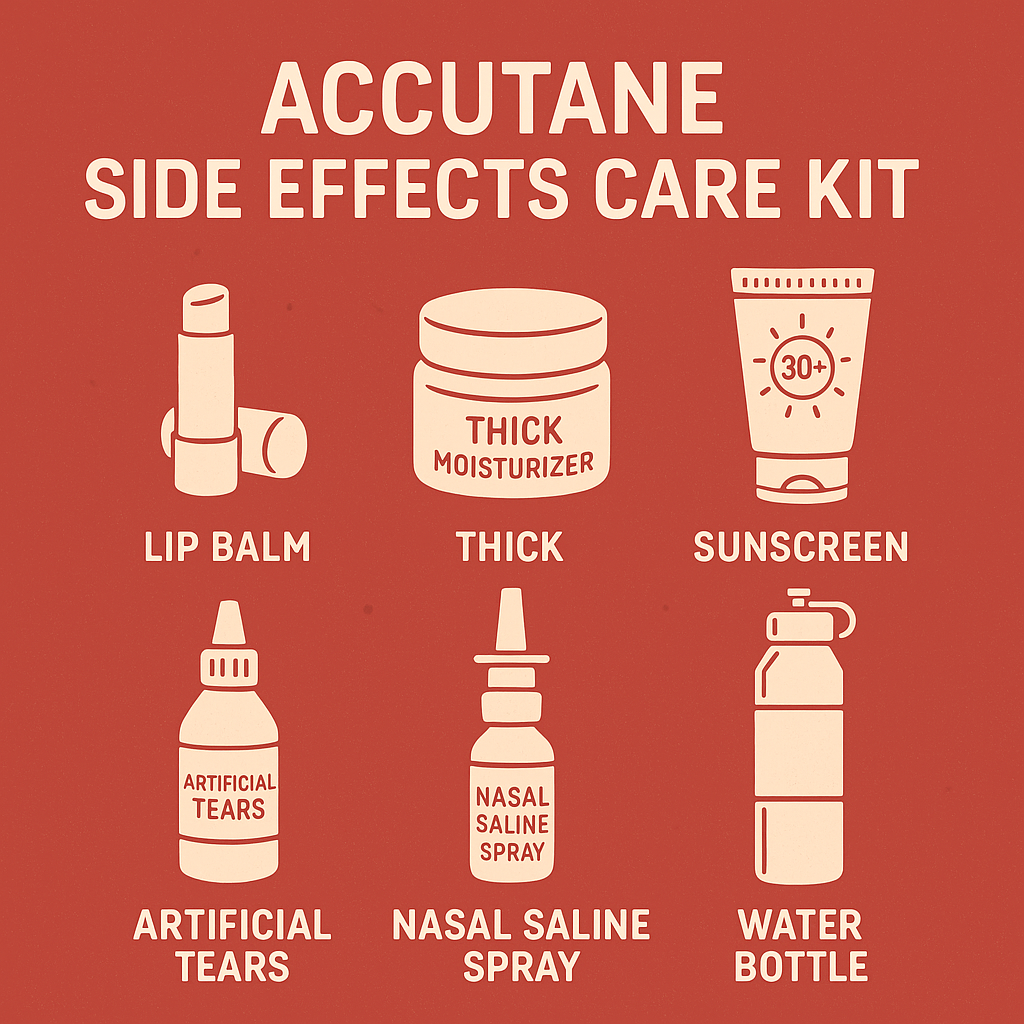
Dry lips and skin: Use a thick lip balm all day and a fragrance-free moisturizer twice daily. Petroleum jelly at night helps prevent splits.
Dry eyes and nose: Artificial tears and saline sprays are safe go-tos.
Sun sensitivity: Use a broad-spectrum SPF 30 or higher every morning and reapply outdoors.
Muscle or joint soreness: Ease back on intense workouts temporarily and discuss with your prescriber.
Headaches or mood changes: Report promptly for evaluation.
Blood tests: Your provider may check triglycerides and liver enzymes during the course.
For gentle adjuncts and skin-support supplements, browse Ancillaries & Cycle Support. If your plan includes isotretinoin capsules, compare formats like Syntex Accutane 25 mg to understand strengths discussed in clinic.
Accutane side effects female
The phrase accutane side effects female usually refers to pregnancy risks and contraception. Isotretinoin can cause serious birth defects. People who can become pregnant need strict birth-control measures, routine testing, and detailed counseling before, during, and for a period after treatment. If pregnancy occurs at any time in the program, contact your prescriber immediately.
“Accutane baby” searches
The term accutane baby trends because of the serious risk noted above. This medicine must never be taken during pregnancy or shared with anyone. Your clinic will outline exact safety steps and consent forms. Do not skip appointments or refills tied to the safety program.
Can you drink on Accutane?
Another common query is can you drink on accutane. Alcohol adds stress to the liver and can worsen triglyceride elevations. Most clinicians recommend avoiding alcohol entirely during treatment. If you decide to drink, discuss absolute limits with your prescriber first. When in doubt, skip it.
Practical tips that help you see results on schedule
Take it correctly: If your product label says “with food,” take it with a meal that includes some fat to improve absorption.
Keep skincare simple: Use a non-foaming cleanser, a fragrance-free moisturizer, and daily sunscreen. Avoid scrubs, peels, strong acids, or retinoids unless your clinician approves.
Plan for dryness: Stock lip balm, nasal saline, artificial tears, and a rich moisturizer before you start.
Photograph progress: Same lighting, same angle, once weekly. Photos make the 6–12 week change obvious even when day-to-day seems slow.
Don’t self-adjust: If side effects are tough, call your clinic rather than changing the dose yourself.
Stay consistent: Results track with adherence and total cumulative dose.
Use community and education: Read recent posts on the Blog and scan FAQs to stay ahead of common issues.
Sample timelines by acne type
These are typical experiences; your plan may differ.
Moderate inflammatory acne
Weeks 3–6: Fewer new papules and pustules.
Weeks 8–12: Clearer cheeks and forehead, less oil through the day.
Months 4–5: Near clear; finish cumulative dose and plan a gentle maintenance routine.
Severe nodulocystic acne
Weeks 4–8: New cysts drop; pain and swelling ease.
Weeks 10–16: Major reduction in deep nodules; fewer emergency visits for injections.
Months 5–6+: Maintenance and scar-care planning after the course.
Relapsing adult acne
Weeks 6–10: Gradual decline in oil and breakouts.
Months 4–6: Clear or almost clear.
After the course: Evaluate whether light maintenance is needed. Some will remain clear for years.
Skincare routine while on isotretinoin
A simple routine speeds comfort and makes it easier to finish your course.
Morning
Gentle cleanser
Hydrating, fragrance-free moisturizer
Broad-spectrum SPF 30+
Evening
Gentle cleanser
Rich moisturizer or ointment on dry spots
Anytime
Lip balm, eye drops, and saline spray as needed
If you want help choosing supportive items, look through Ancillaries & Cycle Support and check Reviews to see how others manage dryness, redness, and sensitivity.
What if you miss a dose?
Take the next capsule at the next scheduled time. Do not double up. If you miss multiple doses, call your clinic. They may adjust the final week counts so you still hit the cumulative target without pushing side effects.
When to contact your prescriber
Severe headache, vision changes, chest pain, shortness of breath
Persistent vomiting, severe abdominal pain, dark urine, yellowing skin or eyes
Mood changes or depression
Signs of pregnancy at any time during or soon after therapy
You can also reach out through your clinic or by using the Contacts page if you need general order support or shipping details for approved products.
The bottom line: how long it takes
If you’re wondering how long Accutane takes to work, expect a slow but steady arc. Dryness and early changes show up in the first two weeks. Visible clearing often starts around 6–8 weeks, becomes obvious by 10–12 weeks, and peaks near 16–24 weeks. A complete Accutane treatment usually spans 4–6 months, tailored to your weight, response, and cumulative dose.
Stay consistent, keep skincare gentle, avoid alcohol unless cleared, and keep the conversation open with your dermatologist. For many who have tried everything else, isotretinoin delivers the best chance at clear, long-term results. If you’re comparing isotretinoin strengths and support items, review Syntex Accutane 25 mg and browse Ancillaries & Cycle Support, then check FAQs and Reviews for practical tips from real users.
Keep reading

What Thymosin Alpha-1 Does and What the Trials Found
Thymosin alpha 1 gets lumped in with healing peptides like BPC-157 and TB-500, mostly because of the name. It is a different thing. It does not repair tissue. It is an immune pepti...
Read article
What Is Cagrilintide?
A weekly amylin shot that, paired with semaglutide, produced 22.7 percent weight loss in REDEFINE 1. How it works, the side effects, and where approval stands.
Read article
Tesamorelin in Canada: What It Is, What the Trial Found, Where to Get It
Tesamorelin is the rare peptide with a Canadian story and a proper clinical trial behind it. It was developed by a Montreal company, approved by Health Canada, and tested in a rand...
Read article