How Peptides Compare to Steroids: Which Is Better for Building Muscle and Recovery? When it comes to performance, recovery, and physique enhancement, two names dominate the conversation — peptides and steroids. Both have earned their place in bodybuilding and medical use, but they work through enti…
In this article
- How Peptides Compare to Steroids: Which Is Better for Building Muscle and Recovery?
- What Are Peptides?
- What Are Steroids?
- How Peptides Work vs. How Steroids Work
- Muscle Growth and Strength Gains
- Fat Loss: Peptides Take the Lead
- Recovery and Healing Benefits
- Health and Safety Comparison
- Side Effects: A Clear Difference
- Post-Cycle Therapy (PCT)
- Who Should Choose Peptides?
- Who Should Choose Steroids?
- Combining Peptides and Steroids
- Long-Term Use and Results
- Cost and Accessibility
- Final Verdict: Which Is Better?
How Peptides Compare to Steroids: Which Is Better for Building Muscle and Recovery?
When it comes to performance, recovery, and physique enhancement, two names dominate the conversation — peptides and steroids. Both have earned their place in bodybuilding and medical use, but they work through entirely different biological mechanisms. Peptides help your body optimize what it already produces naturally, while steroids replace hormones altogether for rapid results.
If you’re deciding between them, understanding how each works, their benefits, risks, and best use cases is key. Here’s how peptides compare to steroids — and how you can use GHCanada’s premium-grade products safely and effectively to reach your goals.
What Are Peptides?
Peptides are short chains of amino acids that act as natural messengers in the body. They regulate functions such as growth hormone production, cell repair, and fat metabolism. Instead of introducing synthetic hormones, peptides tell your body to produce them on its own.
Popular peptides include:
BPC-157 Peptide – known for repairing muscles, tendons, and ligaments.
TB-500 Peptide – promotes faster tissue regeneration and improved endurance.
CJC-1295 + Ipamorelin Blend – boosts growth hormone release naturally.
Tesamorelin – reduces abdominal fat and enhances metabolism.
These peptides are used in both athletic recovery and anti-aging protocols, giving users improved sleep, energy, and recovery without hormonal shutdown.
What Are Steroids?
Anabolic steroids are synthetic derivatives of testosterone — the primary male sex hormone responsible for muscle mass, energy, and libido. Steroids directly bind to androgen receptors to increase protein synthesis and nitrogen retention, resulting in rapid muscle growth.
Common examples include:
Testosterone Enanthate – provides steady testosterone levels and mass gain.
Deca Durabolin – improves joint comfort and lean body weight.
Winstrol Suspension – enhances muscle hardness and vascularity.
Trenbolone Enanthate – known for extreme strength and physique recomposition.
Steroids deliver faster, visible results but come with more complex side effects and recovery requirements.
How Peptides Work vs. How Steroids Work
The main difference lies in how each interacts with your hormones:
| Mechanism | Peptides | Steroids |
|---|---|---|
| Primary Function | Stimulate natural hormone production | Replace hormones directly |
| Speed of Results | Gradual, sustainable | Rapid, dramatic |
| Hormonal Impact | Supports natural balance | Suppresses testosterone |
| Post-Cycle Recovery | Minimal | Requires PCT |
| Risk Level | Low to moderate | Moderate to high |
Peptides encourage your body to enhance what it already does — such as increasing growth hormone or collagen repair — while steroids flood your system with external testosterone, triggering faster but riskier growth.
Muscle Growth and Strength Gains
Steroids remain the fastest path to dramatic muscle size. Compounds like Testosterone Cypionate or Anadrol provide visible mass and strength increases within weeks.
However, peptides build lean, functional muscle over time. For example, stacking CJC-1295 + Ipamorelin with BPC-157 supports muscle regeneration, energy, and long-term maintenance without post-cycle therapy.
Steroids: Ideal for short-term bulk or competitive bodybuilding.
Peptides: Better for longevity, recovery, and consistent performance.
Fat Loss: Peptides Take the Lead
While steroids like Winstrol and Anavar are popular for cutting, they can increase cholesterol and blood pressure. Peptides such as AOD9604 and Tesamorelin promote fat metabolism naturally — especially in the abdominal region — without affecting estrogen or testosterone levels.
AOD9604 acts on fat cells to trigger lipolysis, while Tesamorelin improves metabolism and supports muscle tone. These peptides are perfect for users aiming for fat loss without sacrificing health.
Recovery and Healing Benefits
Peptides truly shine in the recovery department.
Compounds like BPC-157 and TB-500 accelerate wound healing, reduce inflammation, and enhance tissue repair. They are often used post-surgery, after injury, or alongside strength cycles to prevent strain.
Steroids like Deca Durabolin also offer joint relief, but they come with hormonal suppression. Peptides, on the other hand, promote natural recovery without disturbing testosterone levels — a major advantage for athletes looking to stay balanced year-round.
Health and Safety Comparison
| Category | Peptides | Steroids |
|---|---|---|
| Hormonal Suppression | None or minimal | Common |
| Liver Toxicity | Low | High (especially oral steroids) |
| Cardiovascular Strain | Low | Moderate to high |
| Required PCT | Not needed | Always required |
| Legal Status | Legal for research | Prescription only |
| Long-Term Health Risk | Minimal | Significant if misused |
For long-term wellness and sustainable performance, peptides are significantly safer. Steroids, while potent, must be cycled with proper post-cycle therapy to prevent shutdown and side effects.
Side Effects: A Clear Difference
Steroids can lead to:
Acne and oily skin
Gynecomastia (chest tissue growth)
Water retention
Mood swings
Testosterone suppression
Peptides, on the other hand, may cause mild, short-term effects such as redness at the injection site or hunger increase (from GHRPs like Ipamorelin).
If side effects occur, they are generally reversible and dose-dependent — unlike the long-term risks associated with anabolic steroids.
Post-Cycle Therapy (PCT)
After a steroid cycle, PCT is non-negotiable. It helps restore your body’s natural testosterone production. Common options include:
For personalized plans, Post Cycle Therapy Protocols from GHCanada help users recover faster and protect gains.
Peptides don’t require PCT since they don’t suppress hormones. Many users even use peptides during PCT to maintain muscle fullness and recovery — particularly CJC-1295 + Ipamorelin or BPC-157.
Who Should Choose Peptides?
You should consider peptides if you:
Want long-term, sustainable results.
Are focused on recovery and wellness over raw size.
Prefer natural hormone stimulation.
Value safety and legal access.
Peptides are ideal for both men and women, athletes, and aging individuals seeking to restore natural balance without steroid-related side effects.
Who Should Choose Steroids?
Steroids are better suited for:
Competitive bodybuilders seeking dramatic size and strength.
Experienced users comfortable with strict cycling and PCT.
Individuals who monitor bloodwork and health consistently.
Beginners are usually advised to start with milder steroids like Testosterone Enanthate before exploring stronger compounds.
Combining Peptides and Steroids
Stacking peptides with steroids can maximize results while reducing side effects. For example:
Muscle Growth Stack:
Testosterone Enanthate + CJC-1295 + IpamorelinRecovery Stack:
Deca Durabolin + BPC-157 + TB-500Fat Loss Stack:
Winstrol + AOD9604 + Tesamorelin
Peptides can enhance results while supporting tissue repair, sleep quality, and hormone balance throughout the cycle.
Long-Term Use and Results
Steroids are typically used in 8–12 week cycles with recovery breaks. Continuous use can lead to hormone suppression and organ strain.
Peptides, however, can be used long-term or cyclically with minimal side effects. For example:
BPC-157 and TB-500: 4–8 weeks for injury recovery.
CJC-1295 + Ipamorelin: 3–6 months for steady growth hormone support.
Tesamorelin or AOD9604: 8–12 weeks for fat reduction.
This flexibility makes peptides more suitable for extended use and lifestyle optimization.
Cost and Accessibility
Peptides are typically more affordable long-term, considering they don’t require ancillaries or PCT. Steroid cycles often require multiple compounds, liver support, and recovery meds.
| Factor | Peptides | Steroids |
|---|---|---|
| Legal Status | Legal to purchase for research | Prescription only |
| PCT Required | No | Yes |
| Health Risk | Low | Moderate to high |
| Cost per Cycle | $150–$400 | $200–$600 with PCT |
| Long-Term Safety | Sustainable | Risky if abused |
Final Verdict: Which Is Better?
If your goal is maximum short-term muscle gain, steroids deliver unmatched results — but with higher health risks and complex recovery.
If you value balance, recovery, and longevity, peptides are the smarter and safer option. They promote natural hormone function, faster healing, and sustainable growth.
Peptides = Longevity and Recovery.
Steroids = Power and Size.
For research-grade compounds, visit GHCanada’s full catalog for both peptides and anabolic steroids, all tested for purity and consistency.
Keep reading

What Thymosin Alpha-1 Does and What the Trials Found
Thymosin alpha 1 gets lumped in with healing peptides like BPC-157 and TB-500, mostly because of the name. It is a different thing. It does not repair tissue. It is an immune pepti...
Read article
What Is Cagrilintide?
A weekly amylin shot that, paired with semaglutide, produced 22.7 percent weight loss in REDEFINE 1. How it works, the side effects, and where approval stands.
Read article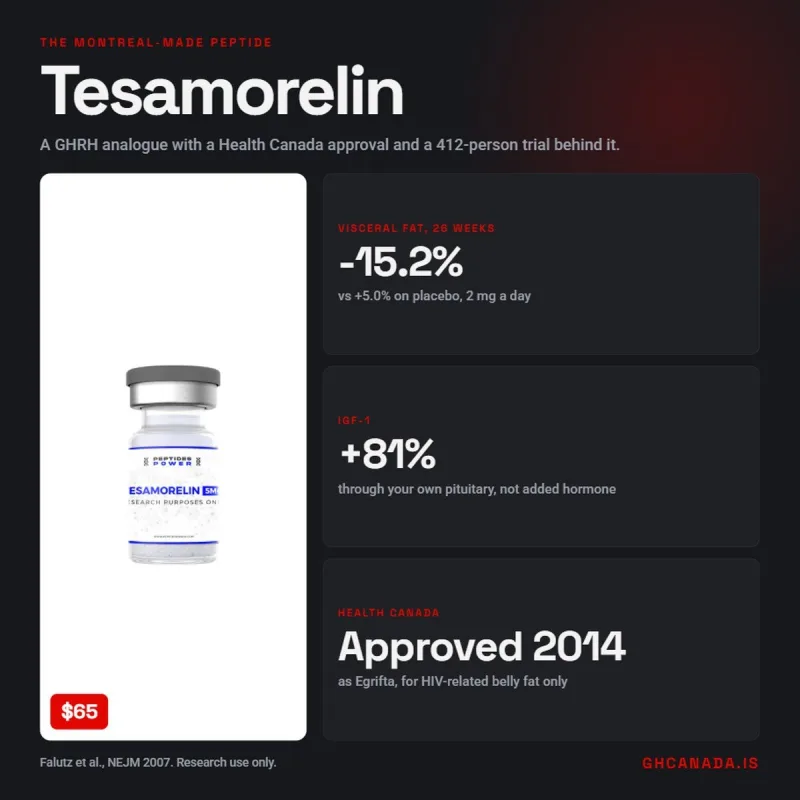
Tesamorelin in Canada: What It Is, What the Trial Found, Where to Get It
Tesamorelin is the rare peptide with a Canadian story and a proper clinical trial behind it. It was developed by a Montreal company, approved by Health Canada, and tested in a rand...
Read article